
The Europe I Keep Coming Back To Asks Different Questions About Technology
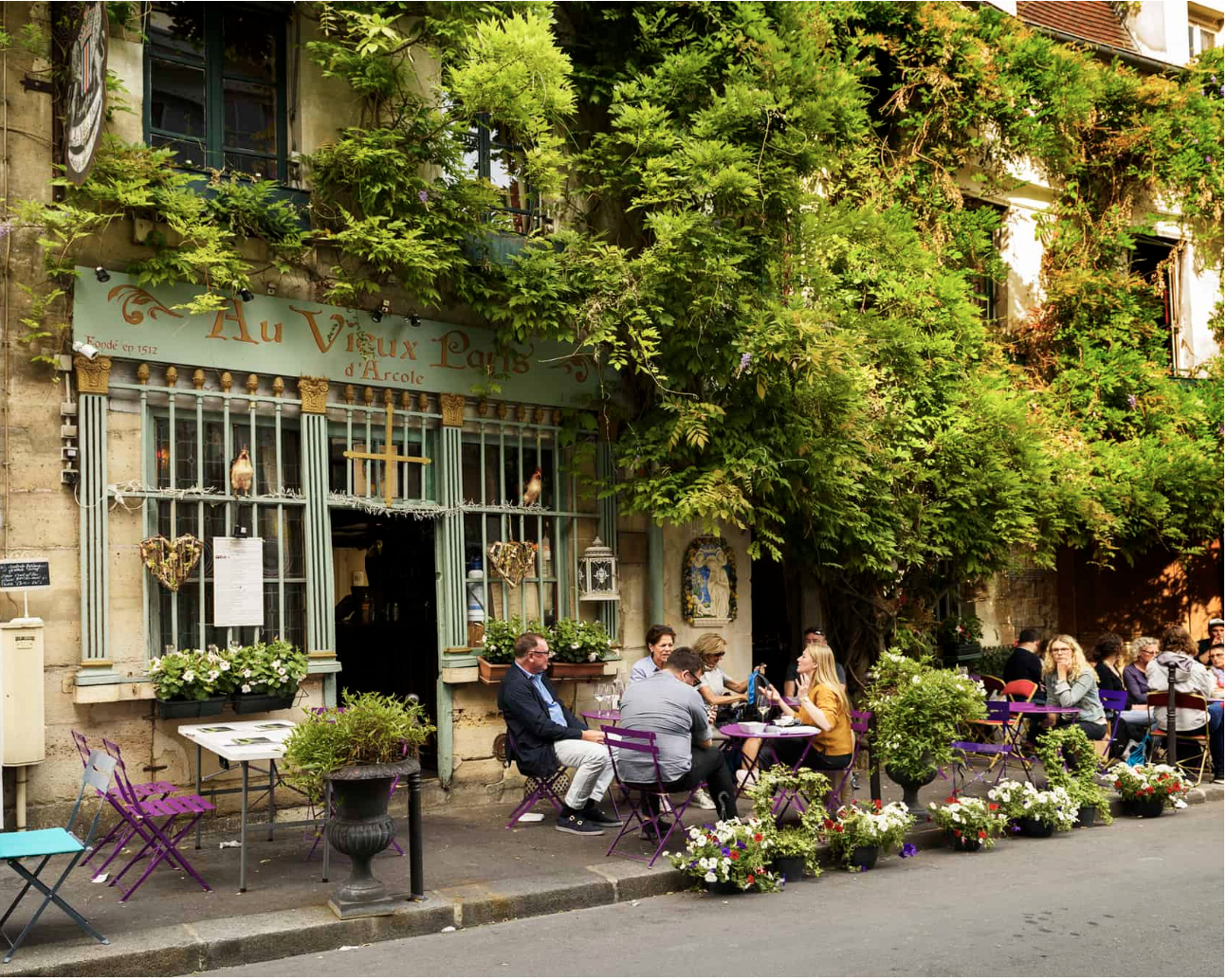
There's a moment that happens every time I land in Europe after time in New York.
The pace shifts. Not because things are slower, exactly— Paris is a city of tremendous energy, Madrid hums with it, but because the relationship between people and their surroundings feels different. More intentional. Like the city wasn't designed around efficiency alone, but around something harder to quantify: the experience of actually being there.
I've been thinking about why that feeling exists, and I keep arriving at the same place.
Europe and America have a fundamentally different relationship with technology, and it shows up not in conference rooms or policy papers, but in daily life.
In the United States, the implicit promise of technology has always been that more is better. More speed, more convenience, more connectivity. The culture rewards the next thing, the faster thing, the thing that disrupts whatever came before it. And that energy has produced genuinely extraordinary results— tools and platforms that have changed how billions of people live.
But somewhere in the pursuit of more, something quiet got lost.
The café that knows your order because you've sat there every Tuesday for three years. The neighborhood that hasn't been optimized out of its character. The ability to be somewhere without simultaneously being everywhere else.
Europe, for all its complications, seems to have held onto some of that. Not because it's resistant to technology (it isn't), but because it has consistently asked a question America often skips: does this improve the life we actually want to live, or just the metrics we've agreed to measure?
That question shows up in small ways that add up.
In the fact that a Sunday lunch is still, genuinely, a Sunday lunch— unhurried, uninterrupted, treated as an event rather than a gap in the calendar. In cities built around walking, gathering, and lingering rather than driving, commuting, and optimizing. In a cultural instinct that says efficiency isn't always the highest value.
It also shows up in bigger ways. European privacy law reflects a belief that personal data belongs to people, not platforms. Urban planning still prioritizes public space and human scale. There's a reason cities like Paris, Amsterdam, and Lisbon keep appearing on lists of the most livable places in the world, and it has less to do with aesthetics than with a philosophy about what cities are actually for.
None of this means Europe has it all figured out. It doesn't. And the American model, its ambition, its willingness to imagine from scratch, its sheer momentum, has produced things worth admiring.
But as technology becomes less of an industry and more of the actual fabric of daily life, I find myself increasingly drawn to the European instinct to pause before adopting, to ask what fits before allowing things to reshape the world around them.
The most interesting question of the next decade may not be what technology can do. We already know it can do almost anything.
The question is what kind of life we want it to serve.
I don't have a clean answer. But I notice I ask it more clearly when I'm walking somewhere slowly, unhurried, with nowhere else to be, which, not coincidentally, tends to happen more often when I'm in Europe.
Maybe that's the point.
Where do you feel most like yourself ? At full speed, or when you slow down enough to notice? I'd love to hear.